
History of Morabaraba
The term Morabaraba is derived from the Southern Sotho Moraba-raba, meaning ‘to mill’ or ‘to go round in a circle’. Anthropologists and archaeologists believe that Morabaraba originated from an ancient Egyptian game known as Mancala. Still, no one really knows when the first Morabaraba game was played. And Morabaraba by any other name is just as sweet. In the Eastern Cape and KwaZulu-Natal, it is called Mlabalaba, and in Limpopo Province, Muravava/Murabaraba. In Zimbabwe, it is called Tsoro, and in Angola, it is referred to as Mbau.
In Southern African culture, particularly among the Sotho and Tswana peoples, cattle herding often required cattle herders to develop tactical skills. A Morabaraba board that is 800 years old was found in Mapungubwe, South Africa. The game is played with 24 pieces, which are called cows. Each player gets 12 cows of a certain colour. Coins, pebbles, or other small objects can be used as cows. The players take turns placing cows on the board.
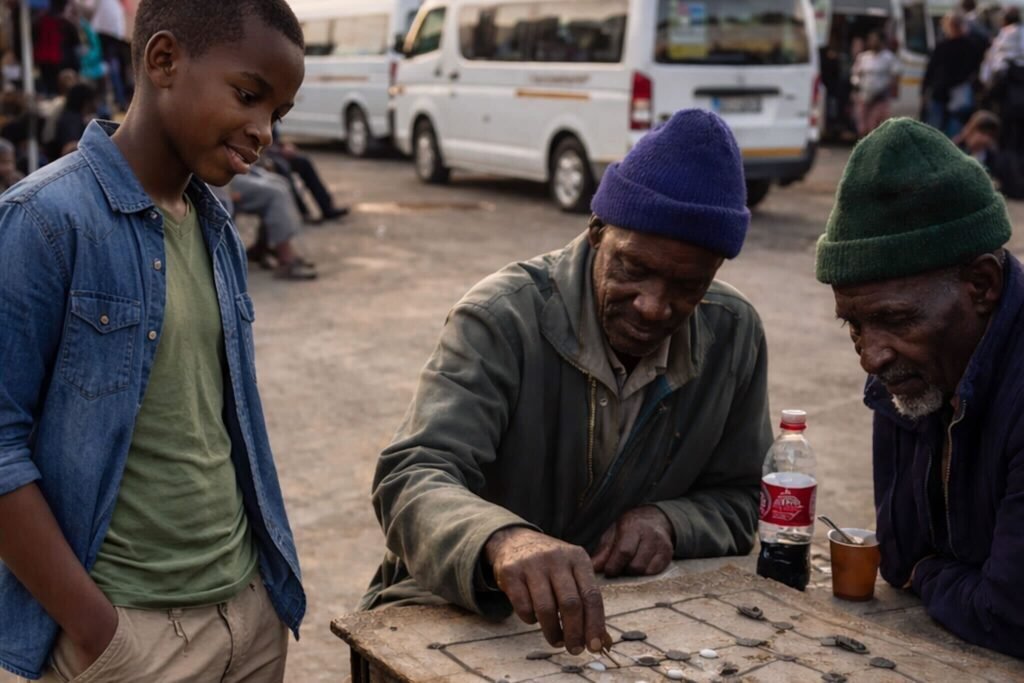
Today, it is acknowledged as a formal, competitive mind sport with national championships in South Africa and inclusion in international traditional game festivals. It is also used as a tool to teach mathematical concepts, counting, and critical thinking in schools, while remaining a popular pastime in rural areas and townships. Morabaraba 3D carries a resemblance to the European game “Twelve Men’s Morris,” but likely developed independently as part of a broader, ancient African tradition of board games.
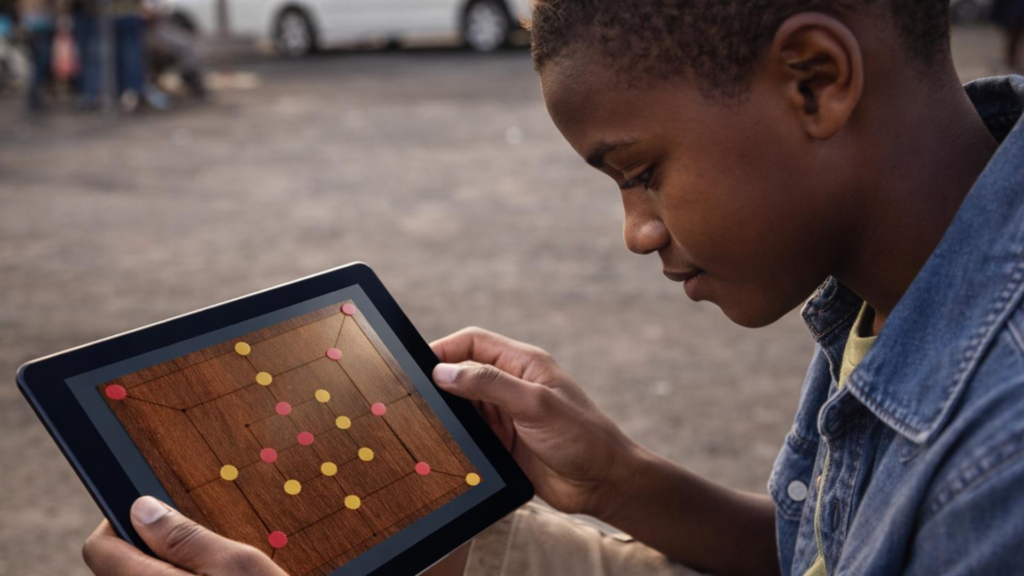
Inspiration of Morabaraba 3D
The inspiration behind the creation of the game Morabaraba 3D is rooted in the preservation of childhood identities and cultural rituals that might otherwise be lost to time. For the creator, the project serves as a digital vessel for the memories of a “lattie” (a young boy), ensuring that the lived experiences of a specific time and place do not fade away.
The Vision: The development of Morabaraba 3D is driven by the desire to digitise a feeling rather than just a set of rules. It acknowledges the identity of the young child, which is tied to the landscape, the community, and the shared rites of passage found in traditional play.
The Mission: The project aims to take passing moments, the dust of the playground, and the focus of youth, and provide them with a permanent home.
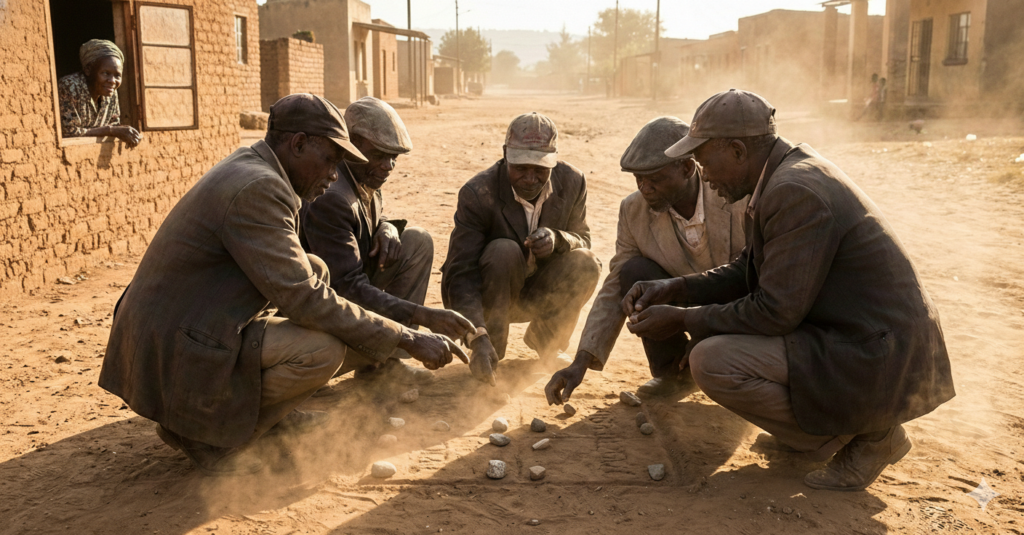
From Dust to Digital
The inspiration stems from the contrast between the game’s humble materials and its strategic depth.
Cultural Ingenuity: Originally played with stones on boards etched into rock or sand, Morabaraba stands as a testament to Southern African ingenuity.
Modern Translation: By transitioning the game to a modern platform, the creator bridges the generational gap, translating an ancient heritage into a language that resonates with today’s tech-savvy youth.
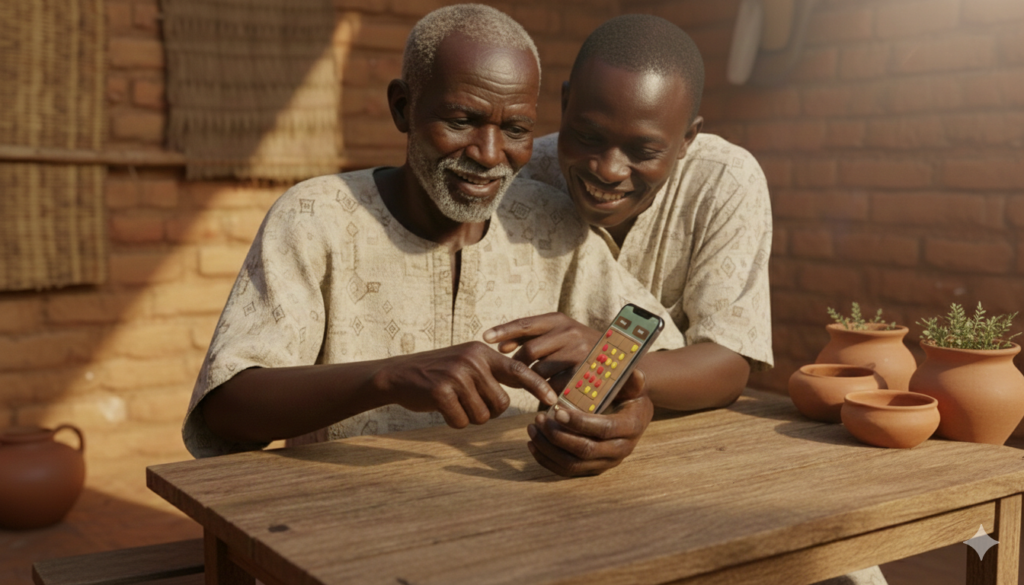
Benefits of Playing the Morabaraba 3D Game
The game requires careful planning and the ability to anticipate the opponent’s moves, which enhances strategic thinking. It teaches the importance of healthy competition and communication skills, which are valuable in social interactions. The game can be used in educational settings to teach mathematical concepts like area and perimeter and to promote teamwork as well as critical thinking. It serves as a bridge between past and present, connecting youth, wisdom, strategy, and heritage. Morabaraba teaches emotional control and intelligence, showing players how to stay calm after losing a cow, recover from setbacks, and wait for the right moment instead of rushing. This game strengthens cultural pride, as it connects generations through shared knowledge and preserves indigenous logic systems. This indigenous game helps improve memory and focus while incorporating fair play, accountability for mistakes, and respect for agreed-upon rules. It forces players to adapt strategies quickly, think creatively with limited options, and make decisions with incomplete information. It builds social confidence, especially for younger players and elders playing together. The patience and emotional control gained from the game quietly transfer to real-life decision-making. Playing Morabaraba 3D not only provides entertainment but also contributes to the development of essential life skills and cultural understanding.
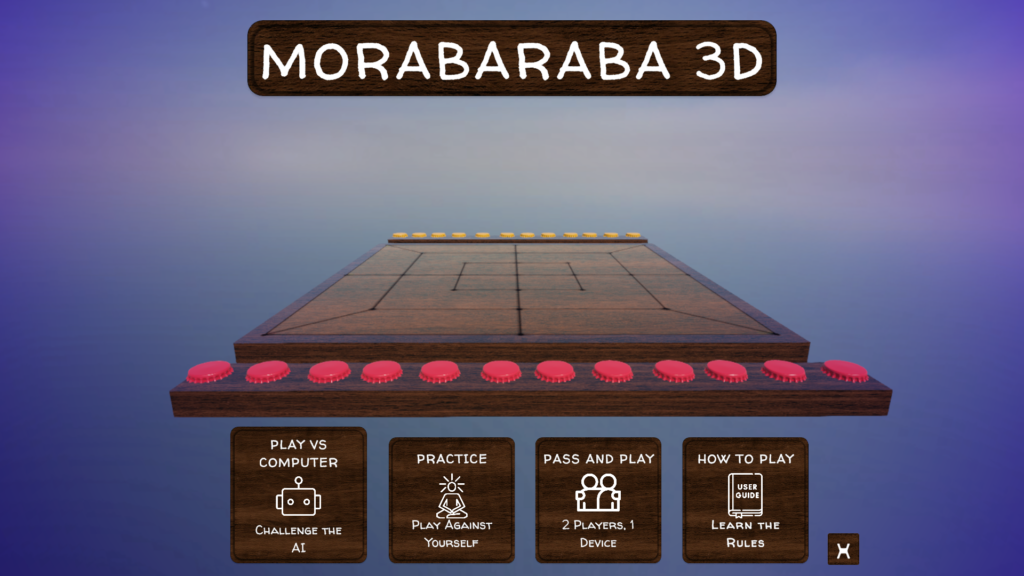
Preserving Tactile Memory
The project is fueled by the memories of childhood. It seeks to capture not just the mechanics, but the atmosphere surrounding the game:
Strategic Foresight: Honouring the “Twelve Men’s Morris” variation that requires immense patience and skill.
Social Connection: Replicating the communal spirit of the game, where matches often draw crowds of vocal spectators.
Validation of Heritage: Affirming that the playstyles of a Southern African childhood are valuable and worthy of high-level preservation.
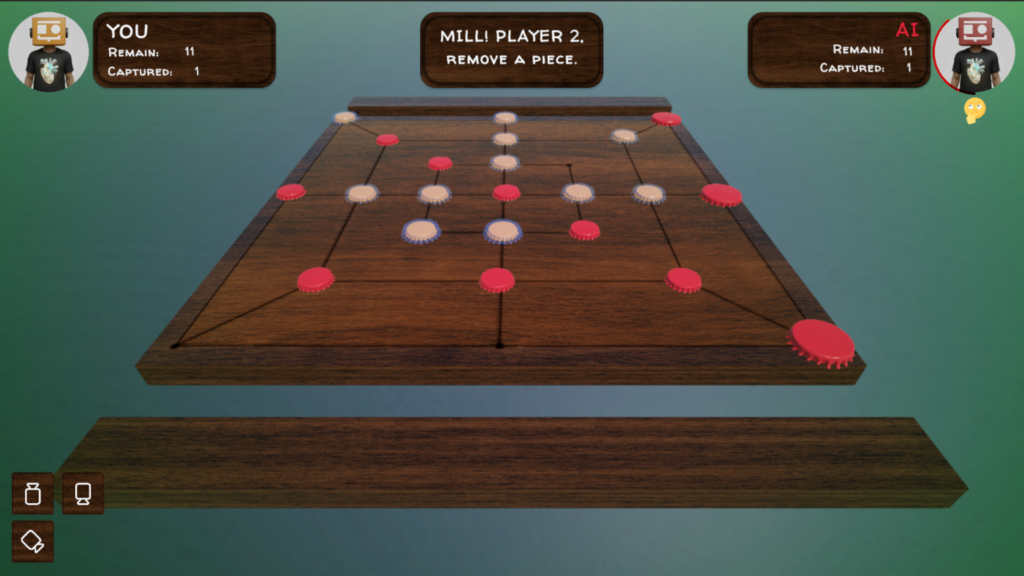
What People Say about Morabaraba
“The game isn’t only known in rural areas; it’s also very much a township game,” says Kenneth Mampane, a 47-year-old from Atteridgeville in Pretoria West. Although he has never lived in a rural area, Mampane knows Morabaraba inside and out. “We used to play it during school holidays with our friends and older brothers. It kept our wild minds active, competitive, and full of energy.”
Gontse, a 29-year-old from Atteridgeville in Pretoria West who has also never spent time in a rural area, shares a similar experience. “I used to play it at school with my friends during lunch breaks and after school while we waited for transport to take us home,” she says. “This game reminds me of a time when we only stressed about simple things. Playing it is a nostalgic experience; it feels like an escape from adulthood. It takes you back to moments when every family member was still alive and family gatherings were frequent.”
She adds that people are often surprised by her knowledge of the game. “Of course, people don’t expect me to know this ‘old’ game because I’m in my twenties. I learned it from my older brothers.”
These reflections show that Morabaraba is more than just a game. It carries memories, culture, and joy across generations. What is considered old does not have to fade away or be forgotten; it can be refined, reimagined, and kept alive through thoughtful innovation.
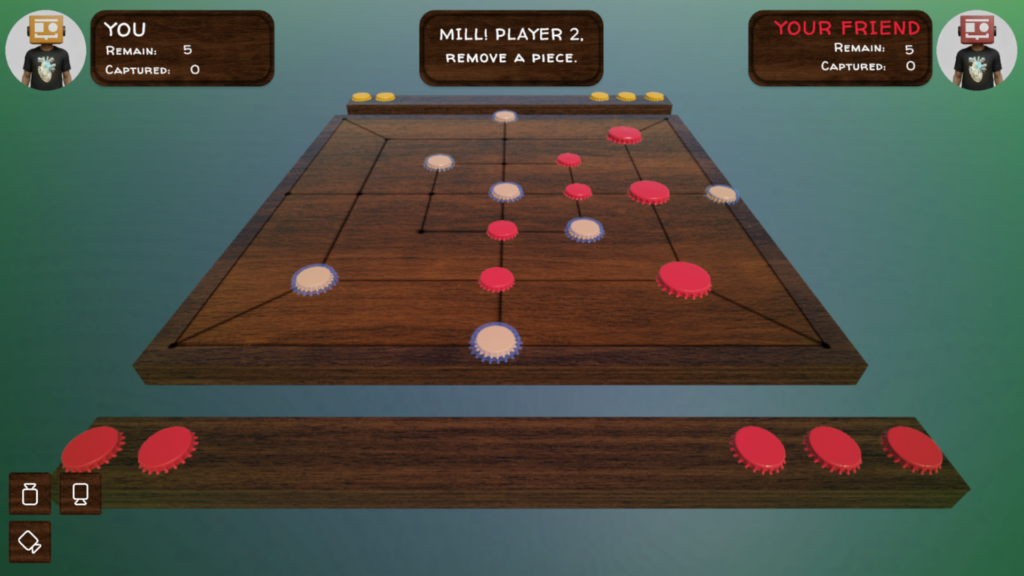
Way Forward
Finally, Morabaraba 3D is more than a digital adaptation—it builds a bridge between generations that ensures Southern African originality is never lost to time. By moving from the dust to the digital screen, the game preserves a cultivated logic system while transforming ancient tactical wisdom into a modern tool for mental agility. Whether played for competitive mastery or cultural connection, it stands as a permanent home for our heritage, asserting that the playstyles of an African childhood are not only valuable but crucial for sharpening the minds of the future.
Credits
Writer and Researcher
Usenathi Mputumana
Interviews By
Jessica Lethole
Proof Read By
Katleho Lukhele
Mathoto Hlajuoe
Web Designers
Mandisa Maphumulo
Bongisani Mabhena