
Are we losing our childhood or are we creating it digitally??
Our childhood memories are something we carry with pride. They bring a sense of joy, peace, and belonging. Remember when the only things that mattered were eating, getting dirty, and playing all day? Going home was only for food or a quick bathroom break, then it was straight back outside.Those moments, those games, those memories, they’re shared across generations. But now the question is: will that culture continue the same way? Or will it be passed down differently, through digital innovation?

Image by Freepik
The digital age has completely changed what childhood looks like today. More kids are spending time on screens instead of playing outside or connecting face-to-face. And that’s where the concern comes in, are we slowly losing those real childhood experiences? And what does that mean for mental health, learning, and social development?
Some people believe technology isn’t taking childhood away but rather reshaping it, giving kids new and exciting ways to explore and interact with the world. Others, however, feel it’s doing more harm than good. The simple moments we grew up with, playing on jungle gyms, running around outside, creating games out of nothing are slowly fading. Instead, kids are spending more time in digital spaces, sometimes he is even exposed to content that isn’t meant for them.
The conversation is still ongoing. Some people push for balance, making space for both screen time and real-life interaction. Others believe nothing can replace traditional play and the social skills that come with it.
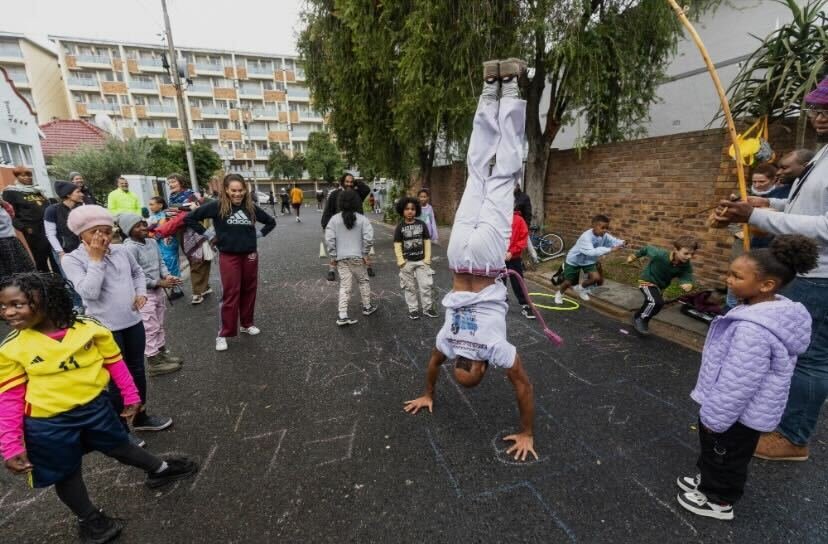
Image by Ashraf Hendricks
As technology continues to evolve, the real question becomes: how do we hold on to the heart of childhood while still preparing kids for a digital future? Because before data bundles, smartphones, and constant notifications, childhood looked very different. The streets were our playground. Dusty, loud, and full of life. You didn’t need a download or a controller, just your friends, a bit of imagination, and maybe a stone, a stick, or a line drawn on the ground.
From early mornings to sunset, kasi streets were alive. Games like diketo, skipping rope and even games we made up as we went along, those were the moments that shaped us. You didn’t just play, you learned. You learned how to negotiate, how to lose, how to win, and most importantly, how to connect.

But fast forward to today, and things feel different. More kids are indoors. More screens, less streets. Instead of calling your friends outside, it’s now about logging in, joining a server, or sending a voice note. The energy has shifted. The laughter is still there, but it sounds different now. It comes through headphones instead of echoing down the street.
So the question remains: are we losing our childhood… or just recreating it in a new way?

Image by Shine Liberia
On one hand, it feels like something is slipping away. Those raw, unfiltered moments of running around, getting dusty, and being fully present are becoming rare. The kind of play that didn’t need electricity or Wi-Fi is slowly fading. And with that comes the fear that the social skills, creativity, and real human connection we built might fade too.
But on the other hand, maybe childhood isn’t disappearing, it’s evolving. Kids today are still playing. Still connecting. Just differently. Digital games are creating new spaces for interaction, creativity, and community. A child in one place can now play with someone miles away. The playground is no longer just the street, it’s global.
Still, there’s something special about the simplicity of how we grew up. The way we turned nothing into something. The way the streets brought us together without needing a screen in between.
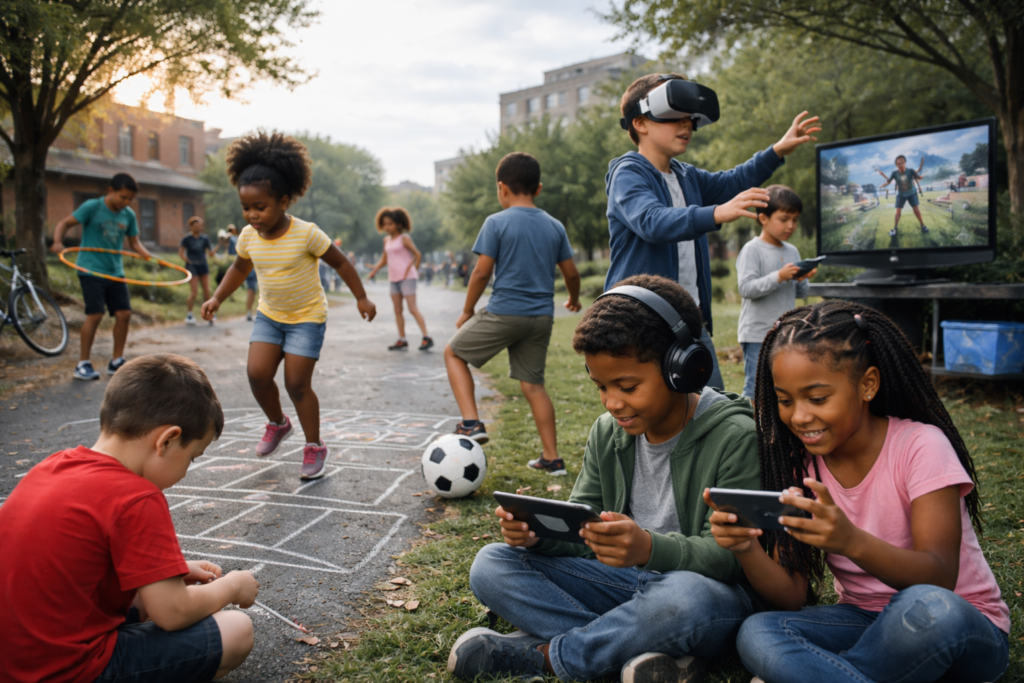
Maybe the real issue isn’t choosing between the past and the present but finding a balance. Holding on to the essence of those street games while embracing the opportunities that come with digital play.
Because childhood shouldn’t be something we lose. It should be something we carry forward, even if it looks a little different.
Credits
Writer and Researcher
Jessica Lethole
Edited By
Usenathi Mputumana
Proof Read By
Mathoto Hlajuoe
Katleho Lukhelo
Web Designers
Mandisa Maphumulo